Concrete Around the World: 5 Amazing Structures You Never Knew Were Made of Concrete

Think concrete's just for patios and garden slabs? Think again. From the ancient streets of Rome to the glittering skyline of Dubai, famous concrete structures have shaped our world in ways most people never realise. Modern concrete buildings push the boundaries of what's possible in architecture and engineering, thanks to advances in concrete pumping, precision formwork, and reinforcement systems.
Whether you're planning a basement extension or curious about how global landmarks come together, understanding what makes these structures work can change how you approach your own project. So, let’s look at five amazing structures you never knew were made of concrete.
Why Concrete Is the World's Most Versatile Construction Material
Before we explore famous concrete structures around the globe, it's worth understanding why architects and engineers keep coming back to concrete for their most ambitious projects; it’s not just about tradition or cost, though both do matter.
Concrete offers a unique combination of properties that no other building material can match, making it essential for everything from high-strength concrete skyscrapers to intricate concrete building designs at ground level.
Here's what makes concrete so adaptable:
- Unmatched Strength and Durability – Properly specified concrete can last centuries, resisting weathering, wear, and structural stress.
- Mouldable Design Flexibility – Unlike steel or timber, concrete can be shaped into virtually any form, enabling complex curves and dramatic architectural statements.
- Fire Resistance and Structural Performance – Concrete doesn't burn, warp, or collapse under extreme heat, protecting lives and property.
- Suitability for Large-Scale and Difficult-Access Construction – Modern concrete construction techniques allow placement in challenging locations, from tower heights to basement depths.
This versatility explains why concrete remains the world's most widely used construction material.
1. The Sydney Opera House, Australia – A Concrete Engineering Icon
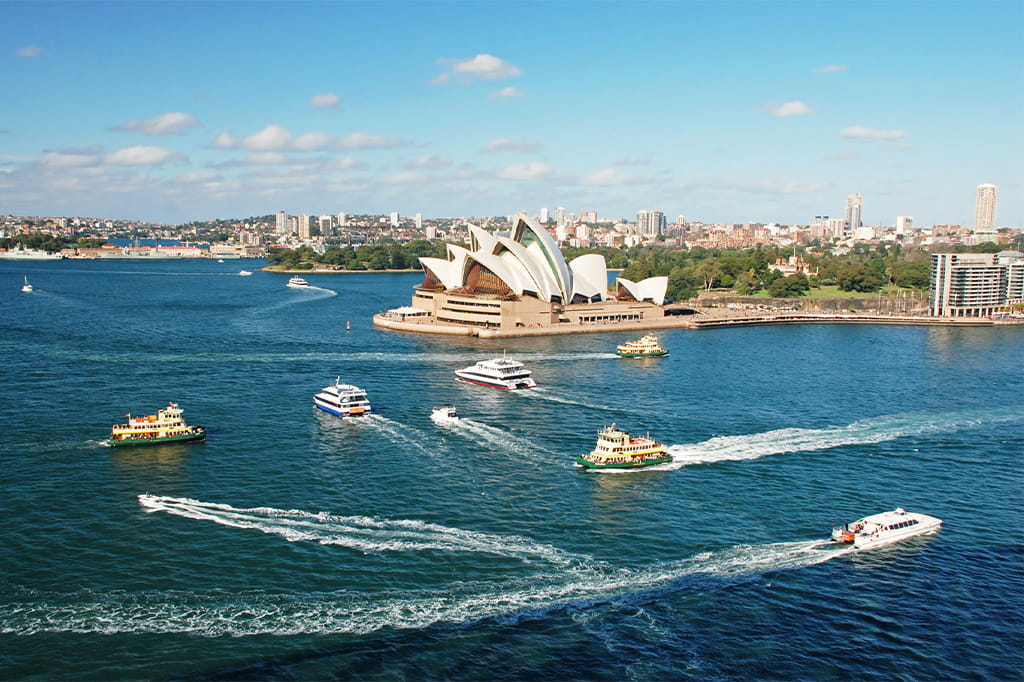
When Jørn Utzon designed the Sydney Opera House in the 1950s, many engineers thought his vision was impossible. The building's distinctive sail-like roof wasn't just an aesthetic choice, but one of the most innovative concrete structures ever attempted at that time. Each shell is formed from pre-cast reinforced concrete ribs that interlock with remarkable precision, creating a geometry that seemed to defy physics.
What makes this structure truly remarkable is the complex formwork required to achieve those sweeping curves. One of the greatest concrete engineering marvels on display here involved casting each rib section to tolerances of just millimetres, then assembling them like a three-dimensional puzzle over Sydney Harbour.
This level of precision demanded controlled concrete placement and careful curing, techniques that laid the groundwork for modern high-rise and sculptural concrete work. The Opera House stands as proof that famous concrete structures can be both structurally sound and breathtakingly beautiful.
2. The Pantheon, Rome – Ancient Concrete That Still Stands
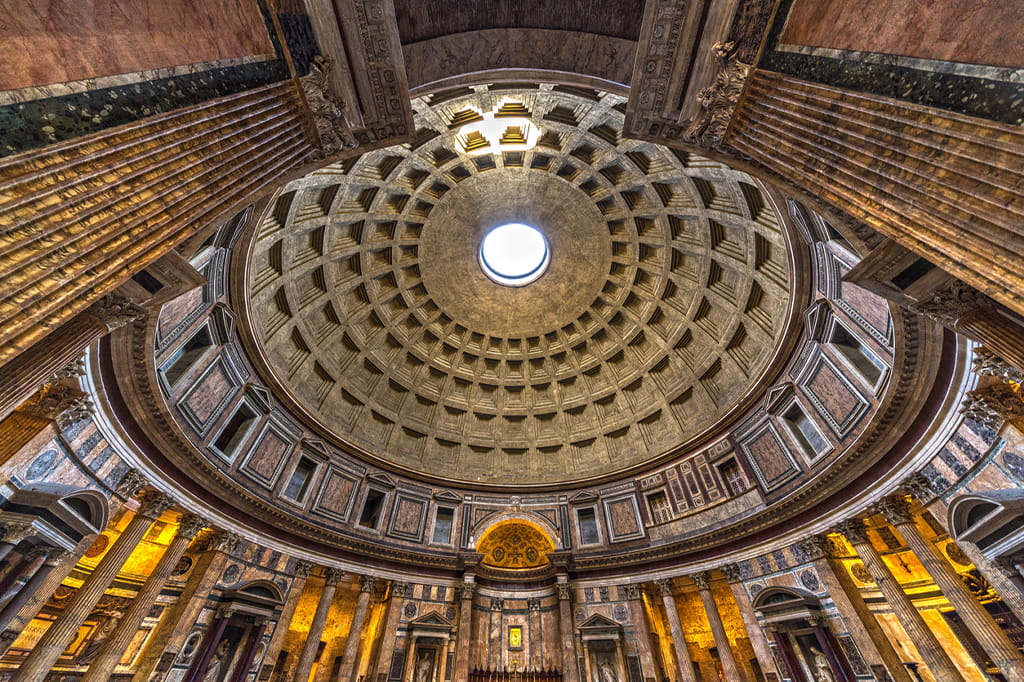
Nearly 2,000 years before modern skyscrapers, Roman engineers were already pushing concrete to its limits, and the Pantheon's dome remains the world's largest unreinforced concrete span, a feat that seems almost reckless by today's standards. Yet this famous concrete structure has outlasted countless steel and timber buildings, surviving earthquakes, floods, and the collapse of the Roman Empire itself.
The secret lies in Roman concrete (opus caementicium), a mix of volcanic ash, lime, and aggregate that was poured in situ to create the dome's massive form. Roman builders understood something crucial about architectural concrete applications: by using progressively lighter aggregates as they built upwards (volcanic pumice near the crown), they reduced the dome's dead weight without sacrificing strength.
Modern reinforced concrete has largely replaced these ancient techniques, but the Pantheon reminds us that smart material choices and careful planning are crucial. It's a lesson worth remembering whether you're building a cathedral or a domestic extension.
3. Burj Khalifa, Dubai – Pushing Concrete to New Heights
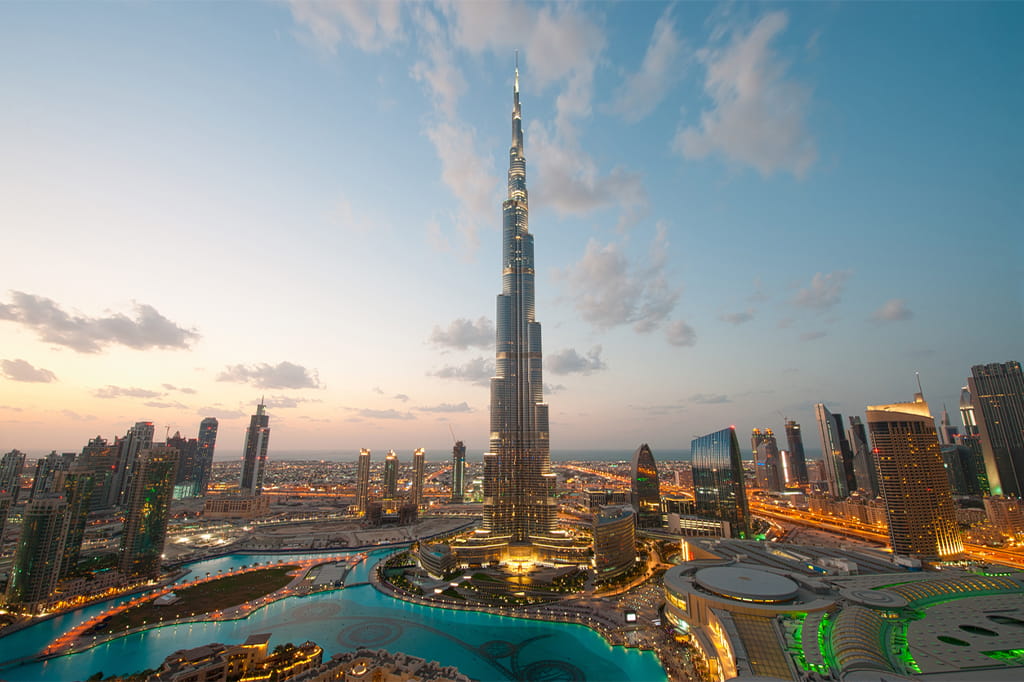
At 828 metres tall, the Burj Khalifa redefined what's possible with high-strength concrete. The tower's structural core is built entirely from reinforced concrete, pumped vertically through one of the most ambitious vertical concrete pumping operations ever undertaken. We're talking about moving concrete upwards at pressures and distances that seemed impossible just decades ago, with material travelling through pipes for hundreds of metres without segregation or loss of workability.
The concrete building designs for the Burj Khalifa incorporated several innovations to manage the extreme demands. Pours were scheduled for cooler night hours to control the concrete's temperature and prevent thermal cracking. The mix itself used specially formulated high-strength concrete capable of supporting the tower's immense weight while remaining workable enough for placement at such heights.
Modern concrete buildings of this scale rely on sophisticated pumping systems with the reach and pressure capabilities to deliver material exactly where it's needed, when it's needed. It's a far cry from wheelbarrows and mixing by hand, but the principles of careful planning and skilled execution remain exactly the same.
4. Hoover Dam, USA – One of the Largest Concrete Pours Ever
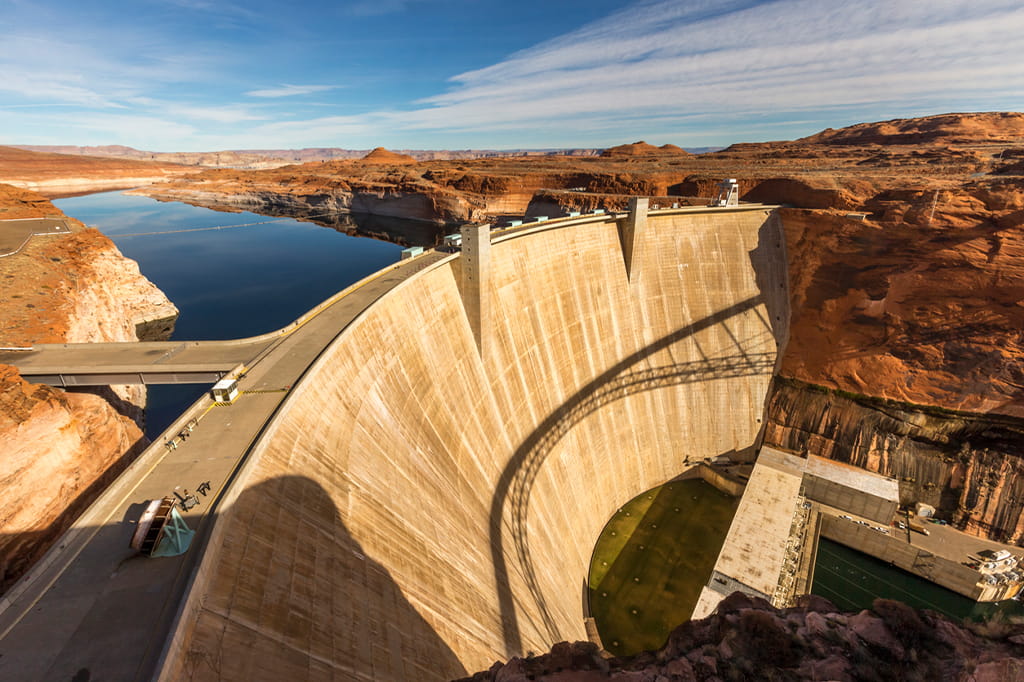
When construction began on Hoover Dam in 1931, engineers faced a problem no one had truly solved before: how do you pour 3.25 million cubic metres of concrete without it cracking apart as it cures? The answer involved rethinking concrete construction techniques from the ground up, treating the dam not as a single monolithic structure but as a series of interlocking blocks poured in situ over several years.
The challenge was thermal. Concrete generates heat as it sets, and in a mass this large, that heat would take over a century to dissipate naturally. Left unchecked, the resulting expansion and contraction would tear the dam apart. To offset this, engineers embedded a network of cooling pipes throughout the structure, circulating ice-cold water to control temperatures during curing.
This approach to large-scale concrete placement set the standard for mega-projects worldwide, demonstrating that success in concrete work isn't just about the mix or the equipment but about understanding the material's behaviour over time. Whether you're pouring a garden patio or a dam, planning for thermal effects and long-term durability matters.
5. The Barbican Estate, London – Brutalist Concrete Architecture
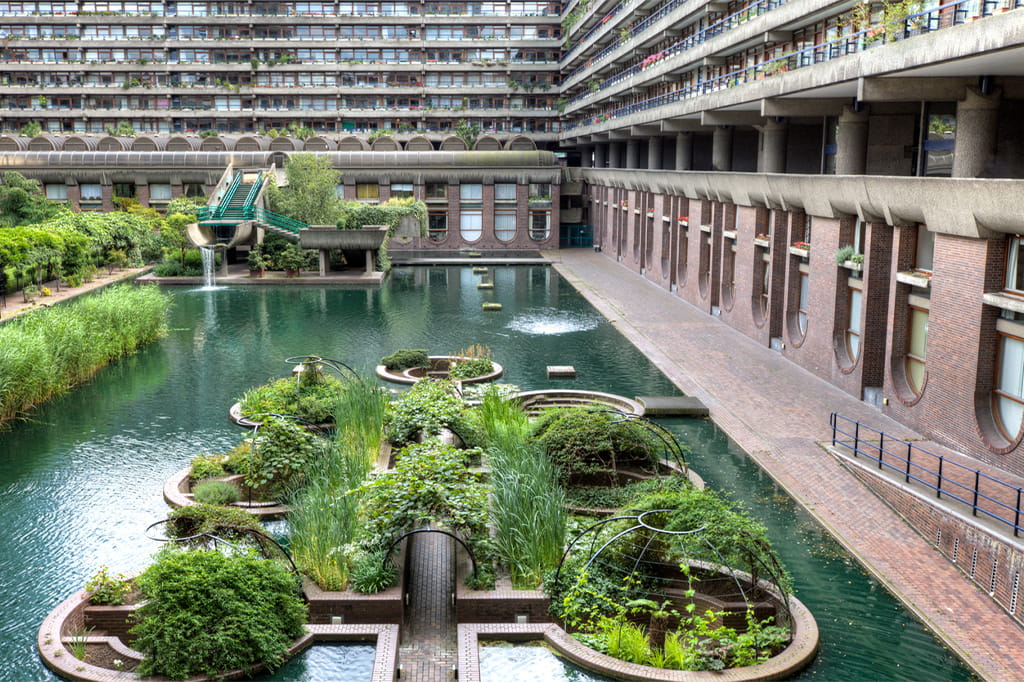
Not all famous concrete structures reach for the sky or span impossible distances. Sometimes concrete's power lies in its ability to create functional, liveable spaces that age gracefully. The Barbican Estate in central London is Britain's largest example of impressive concrete architecture from the Brutalist movement, where exposed concrete (béton brut) wasn't hidden behind cladding but celebrated as the building's finished surface.
Completed in the 1970s, the Barbican's towers, walkways, and cultural venues demonstrate concrete's versatility in urban residential settings. Concrete building designs like this prioritise durability and fire resistance, which are essential qualities for high-density housing. While Brutalism has its critics, the Barbican has proven that well-executed concrete work can weather decades of British rain, pollution, and use while maintaining its structural integrity and visual character.
For UK-based readers planning extensions or new builds, it's a reminder that concrete isn't just about industrial strength but about creating spaces that last. The estate remains fully occupied and culturally vibrant, proof that this much-maligned material can age far better than many assume.
What These Famous Concrete Structures Teach Us About Modern Construction
From Rome to Dubai, these landmarks share common threads that apply to projects of any scale. Whether you're a DIY builder planning a domestic pour or a contractor managing a commercial site, the lessons from these famous structures remain remarkably relevant. High-strength concrete and advanced concrete construction techniques have evolved significantly, but the fundamentals haven't changed:
- Precision Planning Comes First – Every successful concrete project starts with understanding site access, pour sequences, and curing requirements long before the first load arrives.
- Correct Concrete Specification Matters – Using the wrong mix for your application (too weak, too fluid, wrong aggregate) leads to problems that can't be fixed later.
- Access Challenges Need Pumping Solutions – Whether you're reaching 800 metres up or just getting concrete into a rear garden, modern pumping equipment solves problems that would otherwise require massive labour and time.
- Experienced Operators Make the Difference – Precision placement, proper finishing, and quality control require skilled hands, not just good equipment.
These principles connect the Pantheon to your extension, the Burj Khalifa to your commercial slab.
From Global Landmarks to Local Projects – Concrete Expertise Matters
The same material that built these iconic structures goes into modern concrete buildings across the UK every day. Your basement extension, garden office, or commercial foundation might not make the history books, but it demands the same attention to quality and technique.
Professional vertical concrete pumping transforms difficult-access projects, eliminating the backbreaking work of barrowing concrete through narrow side passages or up scaffolding. With the right equipment and experienced operators, concrete reaches exactly where it's needed with consistent quality and finish.
Whether you're working on a residential build or a commercial site, the difference between an adequate concrete pour and an excellent one often comes down to proper planning and professional execution.
Planning a Concrete Project? Get Expert Advice First
Even famous concrete structures started with proper planning. So, if you need concrete pumping or access advice, call 2 Brothers Concrete & Pumping on 01489 552737 or use our contact form. We offer a range of services, from concrete pump hire to permeable concrete, delivered by CPA and CPCS-accredited operatives with full liability insurance.
Curious about concrete? We have a fantastic blog on our website that explores the fascinating history of concrete.
